Global Warfare, Smaller Screen: How the THX® Spatial Audio+ Plugin for Game Developers Brings Call of Duty: Modern Warfare 4 to PC Handhelds
Mike Henein · · Spatial Audio
How do you fit an entire battlefield into handheld speakers? Discover how THX Spatial Audio+ brings immersive, precision-tuned sound to Call of Duty: Modern Warfare 4 without compromising performance.
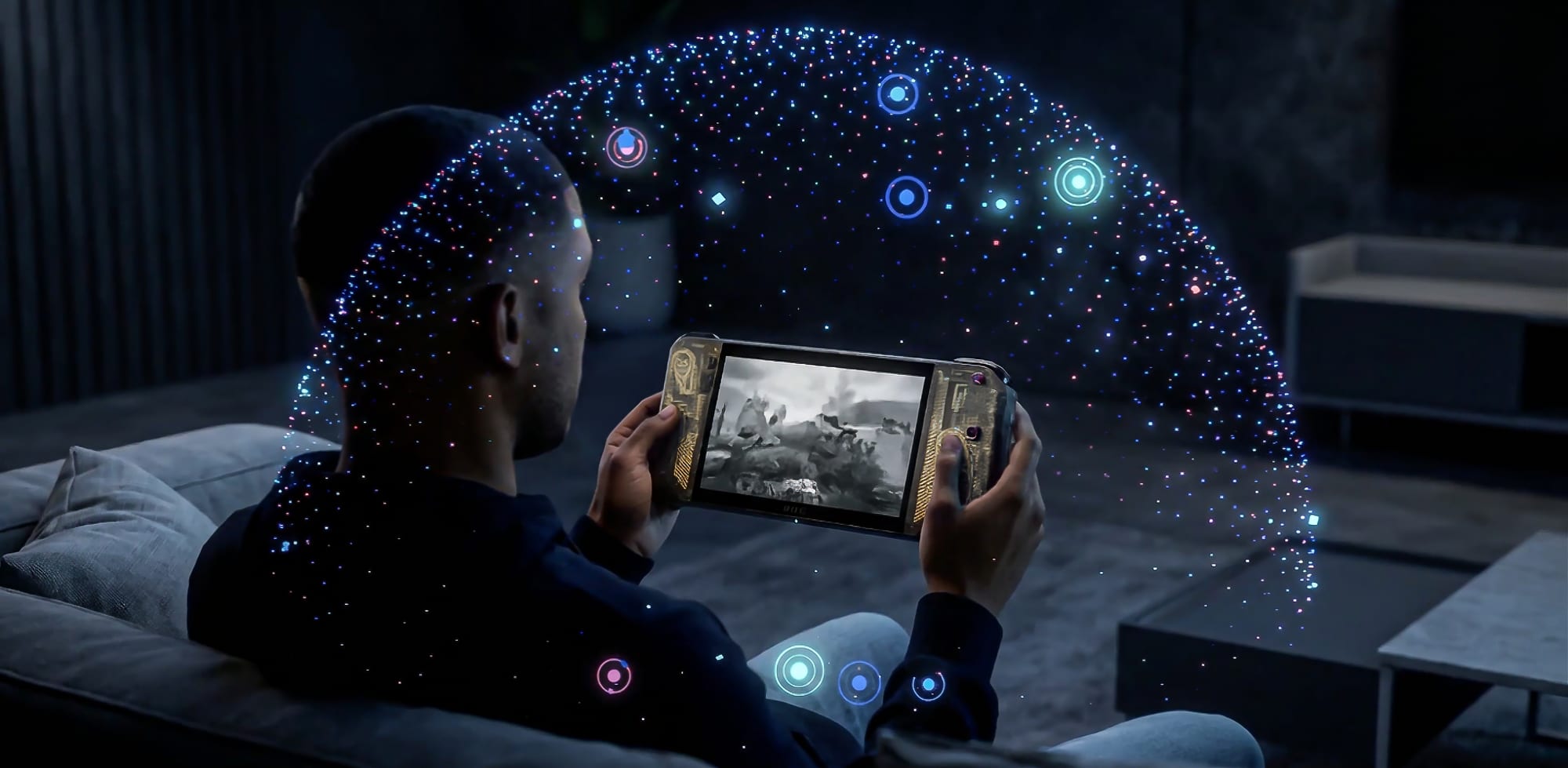
When Infinity Ward set out to bring Call of Duty: Modern Warfare 4 to PC handhelds, the brief was clear: the player on a PC handheld should hear the same MW4 experience as the player on a desktop PC or console. The same footsteps behind the same wall. The same helicopter passing overhead. The same sense of where the fight comes from.
That is a big ask of a device you hold in your hands. Today, Call of Duty: Modern Warfare 4 ships on for Windows' PC handheld gaming devices alongside its desktop PC and console releases. On those PC handhelds, the sound coming out of the built-in speakers is rendered by the THX Spatial Audio+ Plugin for game developers. This article focuses on that PC handheld implementation.
So, if you are a game developer audio director, or audio programmer planning your own PC handheld game releases, this solution is for you. This is how THX built it and how it fits inside one of the most demanding performance targets in the industry, and how we tune each device so the mix you approved is the mix players hear.
The handheld audio problem
As an audio director it would not be unusual for you to spend months building a mix that places the player inside a space. On a console with a surround system, or on a good pair of headphones, that work translates. On a handheld's built-in speakers, much of it collapses.
The reasons are physical. The two speakers on a handheld sit only a few inches apart, so without processing the stereo image rarely extends beyond the edges of the device. The drivers are small, which limits low-frequency output and puts pressure on the midrange. Enclosures, grilles, and the player's own hands all color the sound. Every device model does this differently. And the height content the game’s audio development team authored usually has nowhere to go.
What's lost matters in two ways. In multiplayer, positional audio is gameplay information. If a player can't tell whether footsteps are to their left or behind them, they are at a competitive disadvantage that has nothing to do with skill. In the campaign, immersive audio carries emotional weight. It is much of what makes a firefight feel close and a battlefield feel vast. A handheld that flattens the mix takes away both.
What we delivered for Call of Duty: Modern Warfare 4
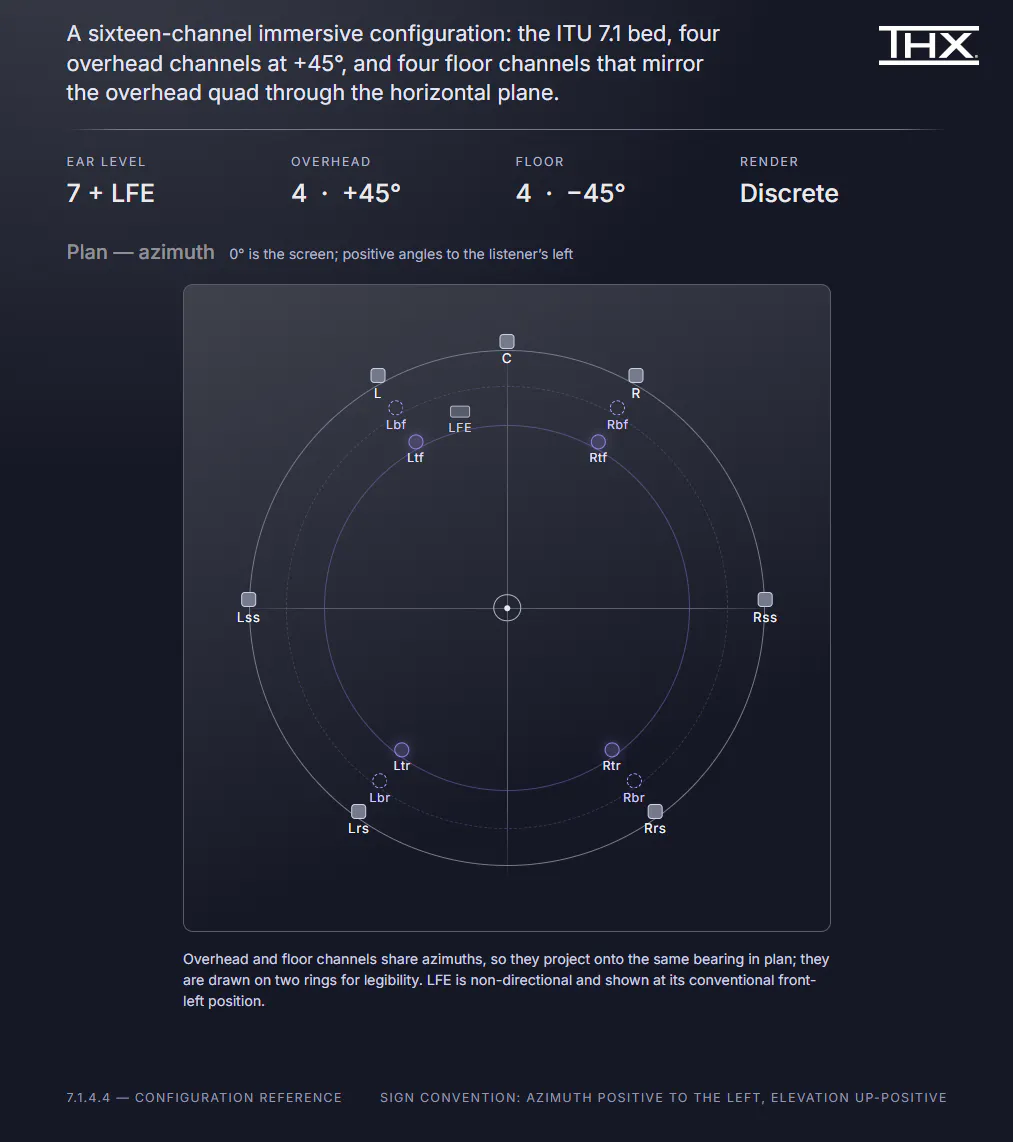
Call of Duty: Modern Warfare 4's audio engine sends the THX Spatial Audio+ Plug in a full 7.1.4.4 multichannel mix on PC handhelds, with height layers above and below the listener. This Plugin renders that mix into a spatialized stereo output: a custom-tuned virtual surround experience built for each handheld's own speakers. The audio team keeps working with a multichannel mix instead of maintaining a separate stereo mix for handhelds, and the plugin manages the job of adding accurate width, height, and depth when that mix is played back over the device's built-in speakers.
On PC handhelds, the full 7.1.4.4 experience ships on every supported device. Because the Plugin scales, Infinity Ward can match the input configuration to each platform: 7.1.4.4 on PC handhelds, and 7.1 on other platforms in the program.
On PC handhelds, the full 7.1.4.4 experience ships on every supported device. Because the Plugin scales, Infinity Ward can match the input configuration to each platform: 7.1.4.4 on PC handhelds, and 7.1 on other platforms in the program.
For Windows PC handhelds: THX Spatial Audio+ over built-in speakers
For Windows PC handhelds, THX Spatial Audio+ renders the 7.1.4.4 virtual surround experience through the device's built-in speakers. The height element of the mix survives: aircraft, rotor wash, and fire from elevated positions keep their sense of height instead of collapsing into the horizontal plane. The soundstage extends well beyond the physical edges of the device, so the directional cues the sound team designed arrive intact. Each model receives its own tuning, based on measurements of that specific hardware.
It is worth being precise about the scope here: on these devices, THX Spatial Audio+ renders the loudspeaker experience only. Headphone output is managed elsewhere in the game's audio pipeline and does not pass through THX immersive audio processing.
It is worth being precise about the scope here: on these devices, THX Spatial Audio+ renders the loudspeaker experience only. Headphone output is managed elsewhere in the game's audio pipeline and does not pass through THX immersive audio processing.
One spatial renderer in the game's audio path
Immersive audio works best when exactly one renderer is doing the job. When more than one layer of spatial processing acts on the same signal, the cues the sound team placed so carefully can blur, and the mix drifts from what the studio intended.
The THX Spatial Audio+ Plugin is designed to fit cleanly into the game's audio pipeline for Windows. When rendering with THX, the studio disables use of the ISpatialAudioClient interface for Windows, which bypasses the operating system’s spatial audio processing and makes the THX engine the only spatial renderer in the game's audio path, so every device-specific tuning reaches the player as designed. The studio controls how the game renders its audio; it does not control other audio processors that the operating system or device may apply downstream of the title. Infinity Ward validated this behavior as part of the Modern Warfare 4 integration.
For game audio directors, this means the path from your mix to the THX renderer is predictable on every PC handheld.
Built for demanding AAA game performance
Frame rates are sacred, particularly in Multiplayer, and every system in the engine competes for a fixed slice of CPU time and memory. Audio gets its allocation, and it does not get to exceed it.
Before the THX immersive audio sound was evaluated, THX engineers began with measuring exactly what the THX plugin consumes.
Before the THX immersive audio sound was evaluated, THX engineers began with measuring exactly what the THX plugin consumes.
Scalable by design
Rather than hand Infinity Ward a single configuration and hope it fit, THX built this Plugin to scale. This approach provides the studio a choice of input configurations: 7.1.4.4, 7.1.4, and 7.1. Each has a measured, fixed CPU and memory footprint, so the team can choose the richest configuration that fits each platform's audio allocation.
In the end, they didn't need to scale down on PC handhelds. Modern Warfare 4 ships the richest configuration, 7.1.4.4, on every PC handheld. The fallback options were there if needed, and the Plugin's efficiency meant no fallback method was needed on PC handhelds. The same scalable design lets other platforms in the program use the 7.1 configuration.
The configuration is fixed at integration, not switched at runtime. That was deliberate. A fixed configuration means a deterministic processing load. The audio team knows exactly what the Plugin will consume on every frame, and the game studio engineering team never has to factor in performance spikes.
Proving the numbers
Infinity Ward set strict CPU and memory targets for each platform. The THX job was to meet them on every device, under every condition the game would realistically encounter, and to show this work:
- Platform-specific optimization. Handheld platforms differ widely in processor architecture. THX optimized each target rather than shipping a single generic build.
- Worst-case profiling not averages. THX profiled the heaviest scenarios the game can throw at the audio system because occasional spikes are unacceptable to ensure heavy firefights, for example, do not impact performance.
- Testing across power modes. Handhelds run at different performance levels depending on power settings, docked or undocked state, and thermal conditions. THX validated the processing load across those modes, not just at peak performance.
- Transparent data at each milestone. THX provided Infinity Ward with detailed CPU and memory profiles throughout development, so their audio and engineering teams could verify the THX numbers against their own captures.
- Latency accounting. In a competitive shooter, added audio latency is felt. THX latency is kept to the absolute minimum to maintain the demanding FPS gaming experience.
The result: the THX Spatial Audio+ Plugin met every CPU and memory target Infinity Ward set, on every PC handheld it ships on, while rendering the full 7.1.4.4 experience on all of them. (While those targets remain internal only to Infinity Ward, they are among the tightest in the industry.)
How THX tunes the device form factor, not just the game
High-performance spatial processing can only be achieved with detailed characterization of the replay chain. A rendering that sounds wide and accurate on one handheld can sound harsh or hollow on another. That is why THX puts every part of the processing chain through an internal measurement and tuning process both in isolation and as part of the overall replay system.
The THX process:
The THX process:
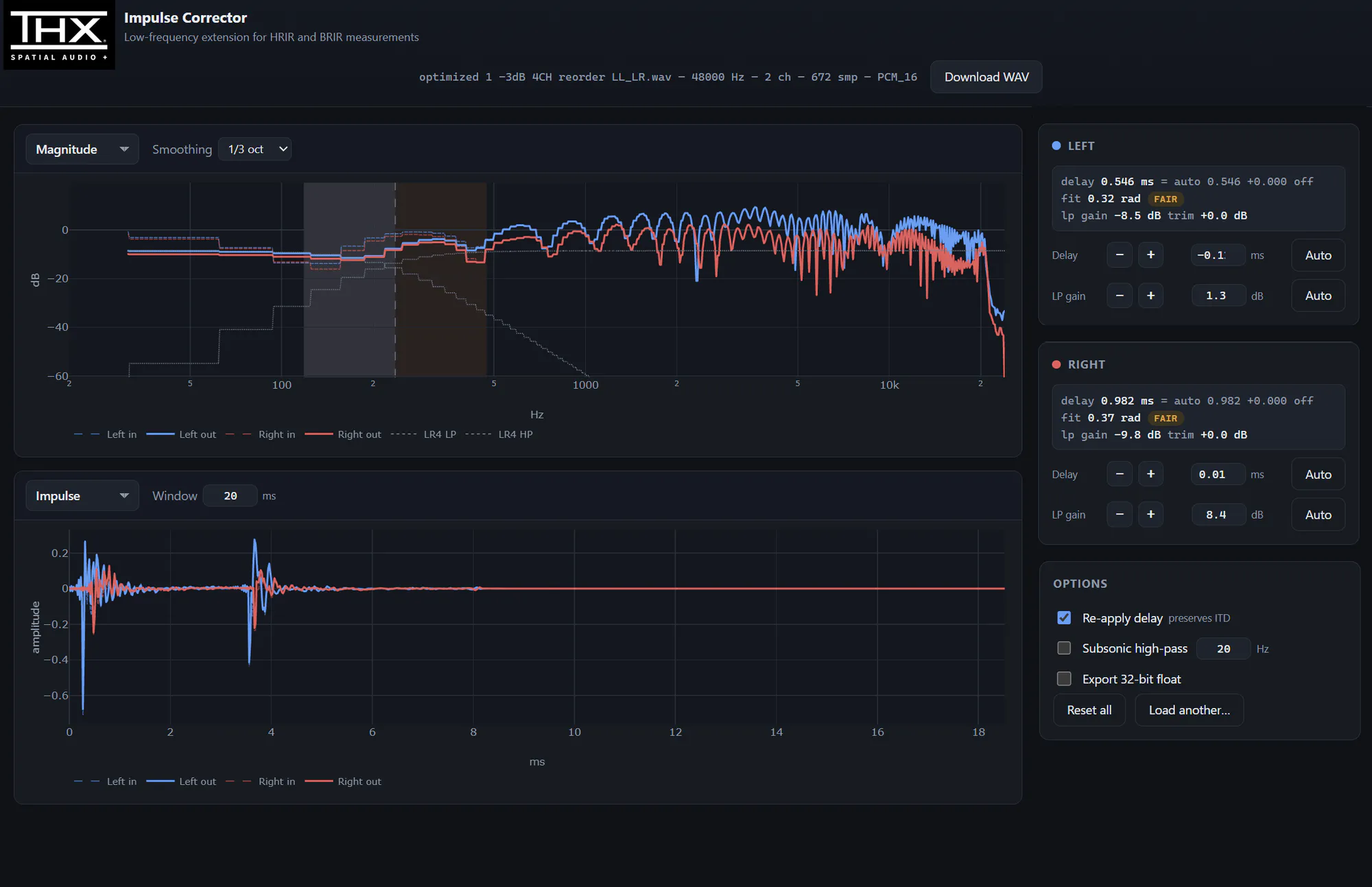
- Measure the hardware as players use it. THX captures the device's acoustic output at a realistic handheld listening position and distance, using a head-and-torso simulator so the measurements include the effect of the player’s body unlike a simple free field microphone.
- Characterize the speaker's behavior. THX looks at frequency response, the stereo image, distortion at different volume levels, and how output changes across the device's operating modes.
- Build a device-specific tuning. Using that data, the spatial rendering is tuned for the specific device, so the processing works with the speaker's strengths and compensates for its limits.
- Validate by measurement and by ear. Every tuning is verified objectively and then evaluated in critical listening sessions with game content, including the positional and overhead cues that matter most in competitive play.
- Review with the studio. Final tunings were reviewed with Infinity Ward's audio team against their reference mix on PC and console, so parity was judged by the people who made the mix.
From laptops to PC handhelds: the same methodology, refined
Handhelds are new, but the problem they pose is not. THX has spent years tuning spatial audio for laptop speakers, including Razer's gaming laptops, hardware that carries the same fundamental constraint: two small drivers, mounted inches apart, firing from a chassis the player sits directly in front of.
That work is where much of the current algorithm comes from. Rendering a convincing soundstage over laptop speakers forces you to solve problems that never arise with a surround system or a good pair of headphones: how to build width when the drivers are too close together to produce it on their own, how to preserve height cues through speakers that roll off early, and how to keep the image stable as the listener shifts position relative to the device. Each generation of that work fed refinements back into the core spatial algorithm.
Handheld gaming devices present the same problem in a smaller package. The drivers are smaller again, the listening distance is shorter, and the player's hands are wrapped around the enclosure. THX brought the same methodology across: measure the specific hardware in a realistic listening position, characterize what the speakers do, tune the rendering to that hardware, and validate by measurement and by ear.
The practical consequence for a studio is that handheld tuning did not start from zero. It started from an algorithm already proven on the closest analogue in the market, and from a measurement process that had been run across many devices before the first handheld ever reached our bench.
Why it matters for your title
Handhelds have moved from a side platform to a core one. Players now expect to pick up a device and carry on with the same game, the same progression, and the same experience they have at their desk or on their couch. For audio teams, that raises a question that didn't used to be pressing: how much of your mix survives the trip?
With Modern Warfare 4, Infinity Ward decided the answer had to be all of it: the competitive detail of Multiplayer and the emotional weight of the Campaign. THX helped them get there without giving up a single frame.
If you are planning a PC handheld release, the THX Spatial Audio+ Plugin offers:
With Modern Warfare 4, Infinity Ward decided the answer had to be all of it: the competitive detail of Multiplayer and the emotional weight of the Campaign. THX helped them get there without giving up a single frame.
If you are planning a PC handheld release, the THX Spatial Audio+ Plugin offers:
- Custom-tuned virtual surround for built-in speakers, rendered from your multichannel mix into a processed stereo output, with headphone rendering available where a title calls for it.
- Scalable input configurations, from 7.1 up to 7.1.4.4, each with a fixed, measured CPU and memory footprint, so the rendering can be matched to the processing headroom of each target platform.
- Performance data at every milestone to validate against your own performance targets.
- Clean “for Windows” handhelds audio pipeline integration with ISpatialAudioClient disabled in the title, so your mix passes through a single spatial renderer, the THX engine, instead of system spatial processing.
- Device-specific tuning based on acoustic measurement of the target hardware, including new devices tuned ahead of their launch in partnership with platform holders.
- Close collaboration with your audio team so the result matches your reference mix.
- Co-marketing support for launch, including THX branding in games and coordinated launch communications.
For further information, please reach out to us at pr@thx.com and info@thx.com.
About THX Ltd.
Founded in 1983 by Hollywood filmmaker George Lucas, THX Ltd. today continues to excel at empowering great entertainment experiences. The company provides innovative technologies and the assurance of superior audio and visual fidelity that truthfully deliver the artist’s vision. THX offerings go beyond studios and cinemas to include consumer electronics, content, automotive systems, and live entertainment venues. THX® Spatial Audio and patent rich THX AAA™ audio technologies, and world-class THX® Certification standards help THX partners bring premium entertainment enjoyment to market in the cinema, home, gaming and mobile lifestyle electronics sectors. THX is headquartered in the USA, with laboratories and development offices in Europe, Taiwan, and China. THX Ltd. in Shenzhen uniquely serves as the only joint Approved Test Center for both HDR10+ and Eclipsa Audio certification in China. For further information, please visit THX.com, reach out to info@thx.com, and find us on Facebook, Instagram, THX Official WeChat, BiliBili, X and LinkedIn.
THX, THX Spatial Audio, and the THX Logo are the property of THX Ltd., registered in the U.S. and other countries. All other trademarks and copyrights are the property of their respective owners.
Mike Henein, Director of Technology Partnerships, THX Ltd.