Razer Indie Lab: A Program For Small Studios With Big Visions
Admin Wyvrn · · Razer Indie Lab
Up to 80% of indie games never find their audience. Razer Indie Lab is out to change that — handing small studios AAA-grade immersion tech, a game QA automation tool, and the reach to get noticed.

Indie is the heart of gaming.
A huge share of new games comes from small studios. But behind that creative energy is a tougher reality: up to 80% of indie titles never gain real visibility.
Even a recent standout like Clair Obscur: Expedition 33 is a rare exception that proves the point: for every game that breaks through, many more fail to reach an audience.
And visibility is only part of it. Many studios move toward launch with very limited budget, which often means no dedicated QA support, no real marketing reach, and luck of immersive features players now expect to find in every game.
That is where Razer Indie Lab comes in.
Razer Indie Lab is built for the kind of team we see across the indie space every day: a small studio, or even a solo developer, with serious ambition. Building for PC first, with eyes on more. A team wearing multiple hats, moving fast, and trying to do more with limited time and resources. If that sounds like your studio, this program is for you.
What Razer Indie Lab Helps With
Razer Indie Lab focuses on the areas where indie teams feel the most pressure:
AAA-level Immersion
Players do not only notice how a game looks. They remember how it feels.
Features like HD haptics, reactive RGB, and spatial audio can make a game feel richer and more distinctive. But for many indie teams, they sit outside the budget or bandwidth of a production already stretched thin.
Through Razer Indie Lab, developers get access to immersive technologies, integration tools, and ready-made effect library that make these features easier to implement. Teams can build custom effects from scratch or use the ready-made ones to create multi-sensory experiences that fit their game.
A Real Example: Immersion In Action
This is not a future promise. Razer immersive technologies are already being used in indie games to create richer, more responsive experiences.
One of the most active publishers in the indie scene – Headup – with titles like Industria 2, Causal Loop, Symphonia, and Super Meat Boy 3D shows how haptics, lighting, and spatial audio can add texture and character in very different ways.
Industria 2 [Bleakmill studio]

Industria 2 (Bleakmill) built its immersive identity around weapon feel, with a distinct haptic signature for every firearm in the player's hands. The pistol delivers a short, clean detonation that fades fast. The SMG is buzzier and looped in the config, reproducing the bite of rapid automatic fire. The revolver adds a deliberate ~90ms delay between the start of the effect and the snap, recreating the "cock then fire" rhythm of the weapon. The shotgun goes furthest: five rapid impacts over a saturated vibration, followed by a 1.5-second rumbling tail closer to physical recoil than a game effect. Landings hit with a low 30–50 Hz thud across hand and legs to sell the weight of the fall.
You don’t just fire weapons—you read them through your hands before your brain catches up.
Causal Loop [Mirebound Interactive]

Causal Loop (Mirebound Interactive) uses color and haptics as a puzzle-solving language. The Branch mechanic lets players release up to three temporal duplicates, each assigned a color—white, blue, green, or red—that propagates across the full Chroma setup so the active echo is always readable. Haptic profiles are built around state transitions: teleport charges as a leg-focused ramp resolving into a full-body burst at trigger; antigravity uses a short entry pulse, low-intensity oscillation during suspension, and a sharp exit cue.
You decode the system before you even realize it—your hands move, your brain follows.
Symphonia [Sunny Peak]
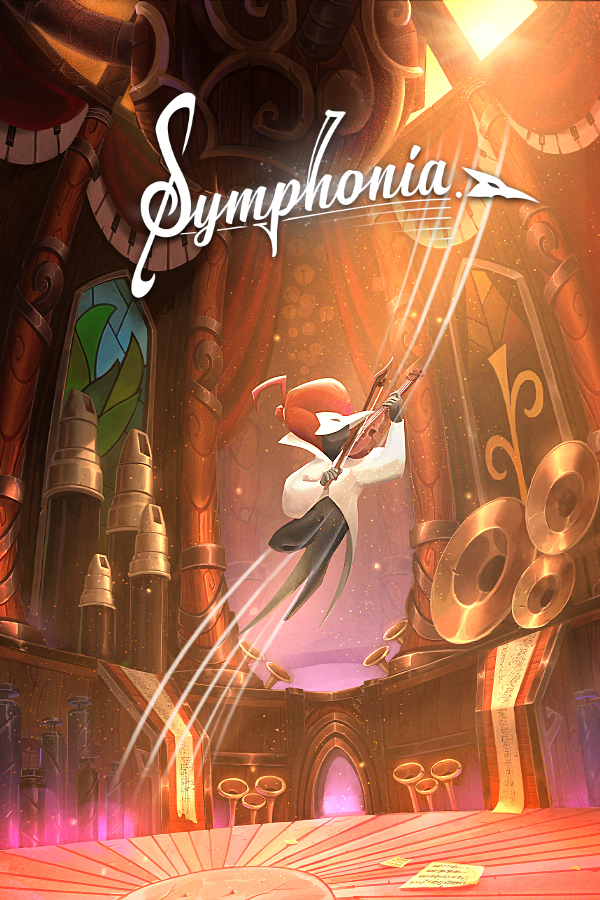
Symphonia (Sunny Peak) maps haptics to movement rhythm: jumps, landings, and wall-jumps trigger feedback on the matching left or right zone of the Freyja cushion, with Chroma flashing red on mistimed landings.
Stay in rhythm, and everything flows. Slip, and the game lets you feel it instantly.
Super Meat Boy 3D Indie Game
![Super Meat Boy 3D [Sluggerfly] game](https://www.wyvrn.com/BlogImages/razer-indie-lab-a-program-for-small-studios-with-big-visions--1/1782729208679-750792478.jpg)
Super Meat Boy 3D (Sluggerfly) took the opposite approach: chaos by design. 27 Chroma-haptic effects, including eight distinct death reactions. Getting electrocuted feels nothing like being vertically sliced. Jumps flow upward through the Freyja, dashes splinter into crackling micro-bursts on the Sensa HD Haptics controller, and every death has its own signature.
Failure stops being a reset—it becomes part of the spectacle you can’t ignore.
Each of these developer teams used Razer's immersion tools in a way that fits their game, not the other way around.
Global Audience Reach
One of the biggest challenges in indie game development is not quality. It is discoverability.
Razer Indie Lab gives selected studios a chance to access co-marketing opportunities across Razer channels, from social channels to editorial content, with the potential to reach millions of players already active in the ecosystem. The intent is simple: if you are building something strong, there should be more ways to help it reach a global audience.
Razer Indie Lab gives selected studios a chance to access co-marketing opportunities across Razer channels, from social channels to editorial content, with the potential to reach millions of players already active in the ecosystem. The intent is simple: if you are building something strong, there should be more ways to help it reach a global audience.
Coming soon: AI-driven QA
For small teams, QA is often one of the first bottlenecks. Without dedicated QA headcount, bugs can slip through, feedback can be hard to structure, and developers can lose valuable time trying to reproduce issues after the fact.
That is why Razer is developing Razer QA Companion-AI, an upcoming tool designed to make QA faster, clearer, and easier to manage for game teams.
The goal is simple: help developers identify issues, capture useful context, and turn gameplay problems into structured reports that are easier to review, share, and act on. Instead of spending extra time manually documenting every issue, teams will be able to focus more energy on fixing what matters most to the player experience.
Razer QA Companion-AI is coming soon to Razer Indie Lab.
Registered participants will be among the first to get access as the tool becomes available.
Razer QA Companion-AI is coming soon to Razer Indie Lab.
Registered participants will be among the first to get access as the tool becomes available.
Built to Be Simple
Razer Indie Lab is meant to be straightforward.
There is no heavy onboarding, no unnecessary friction. Join the program, get access to the tools and resources, start building, start testing, and stay connected as new opportunities roll out. Just practical support for teams trying to do a lot with limited time and resources.